I don’t take photos of them, but here are some glimpses at the process.

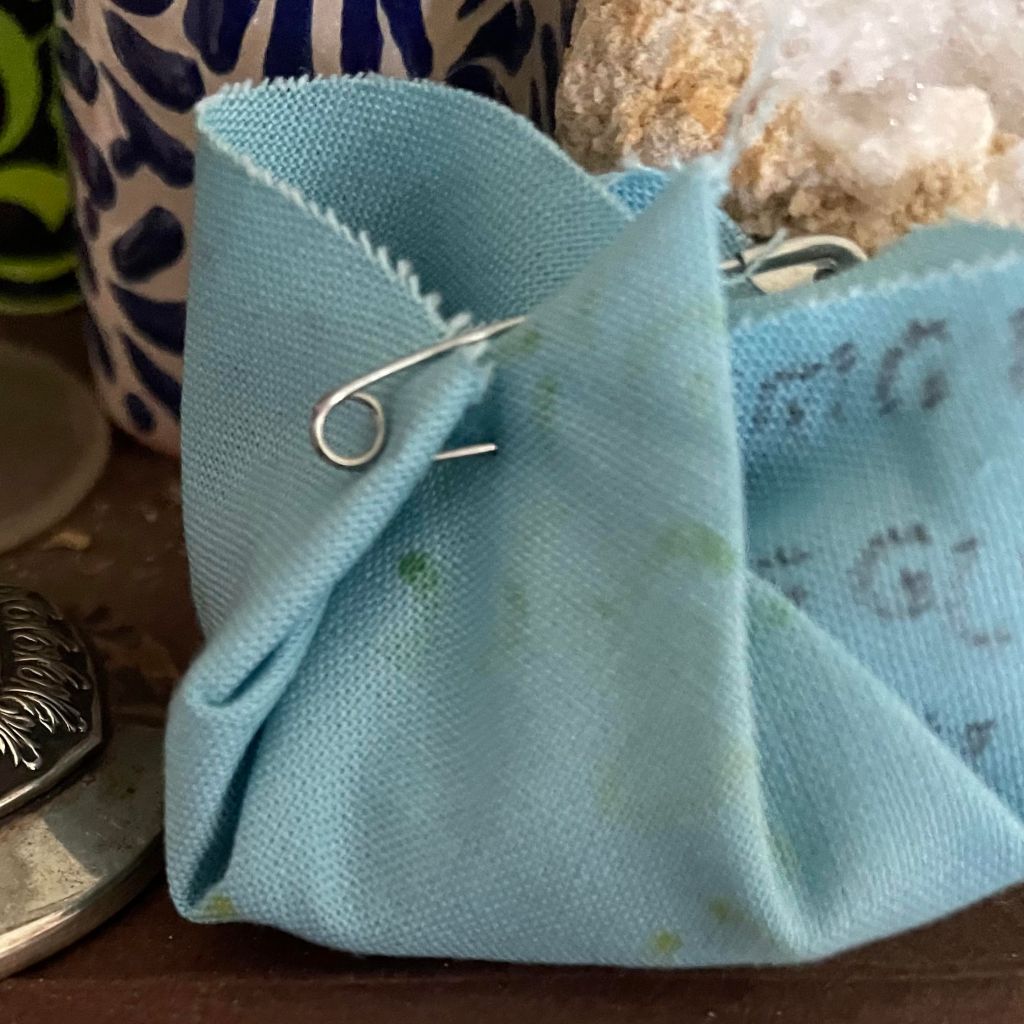
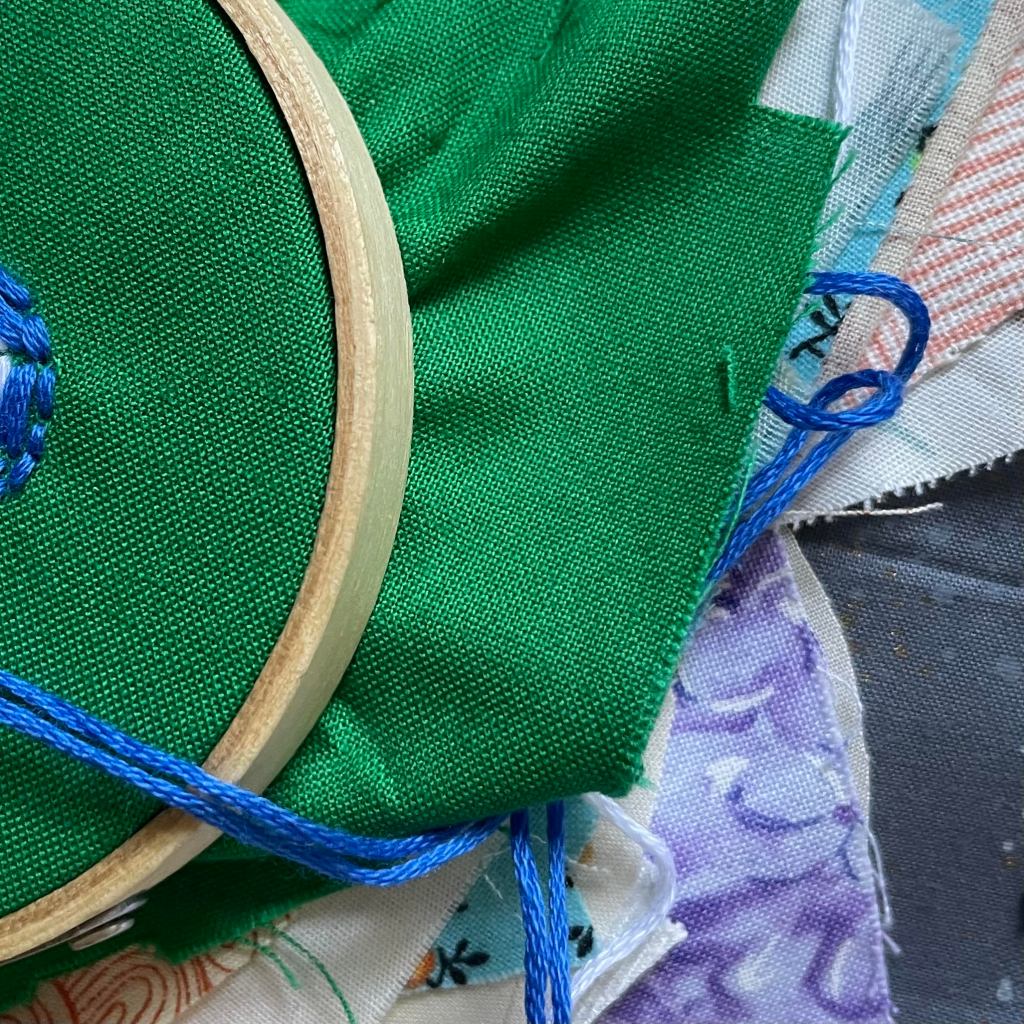
The history of amulets (also known as kame’a in hebrew and bulsika in ladino) is ancient and difficult to track, as are many of the rituals that were deemed superstitious, that reminded us how different we are from others. To me, especially as a poet with an ancestor practice, finding meaning and power and metaphor in objects is the origin of why amulets mean something.
Some excerpts from the Encyclopedia of Jewish Folklore and Traditions, edited by Haya Bar-Itzhak, Taylor & Francis Group, 2012 :
An amulet is an object that is believed to have special beneficial powers, such as the power to protect against misfortune and danger, to heal, to calm a stormy sea, or to increase a person’s success in business. When issued by a religious expert to secure divine blessing in human affairs, it becomes a theurgical tool and an object that has religious importance because it is associated with holiness.
Jewish amulets derive from a mystical approach to life. Their makers and users assume the presence of good and evil spiritual powers. They also assume the possibility of securing divine blessing through esoteric inscriptions on the amulet, or through its association with holiness. The inscriptions that Jews have employed on amulets since antiquity are mostly rooted in literary sources, in the Torah and Midrash, and in Jewish mystical and magical texts.
The Hebrew word for amulet, kame’a, is derived from a root meaning “to bind.” An amulet is traditionally
bound to a person, or to his or her property, to protect against danger. It may be worn, for example, on a neck- lace, pinned to clothing, or bound to the wrist; it may be affixed to a wall, bed, or vehicle. It may be carried in a pocket, or put under the pillow.
In antiquity, Middle Eastern peoples bound protective devices to their arms, wore them on their foreheads, and inscribed their door lintels with protective signs. Jews inscribed biblical verses instead of pagan magical markings. Deuteronomy (6:4–9, 11:13–21) instructs that a man should bind specific biblical verses to his hand and forehead and, in addition, he should inscribe these words on his doorposts and gateposts. Jews have followed this injunction literally, in mounting mezuzot to their door-
posts, to remind themselves of God and of God’s constant watchfulness. However, Jews have long assumed that the words of the Torah carry divine power, and that by binding biblical verses and divine names to themselves and to their property they can profit from the verses’ spiritual force. Thus the Torah is the most important source for verses found in Jewish amulets, from ancient times to the present day, with biblical verses or biblical divine names—such as El Shaddai (Almighty God) and the four Hebrew letters for God (the Tetragrammaton) in any of its permutations—featured on amulets used by
Jews around the world…
Those amulets that are characteristically Jewish areinscribed with verses from the Torah, Hebrew prayers, divine names, or Jewish symbols. Such amulets have commonly been made out of parchment, clay, cloth, stones, paper, and other materials. Magical seals and formulas attributed to biblical figures derive from the Hekhalot literature, the mystical writings produced during the Talmudic and early Gaonic period (c. sixth century through mid-eleventh century), as well as from earlier non-Jewish magical literature. Angels and demons invoked and adjured on amulets often also stem from these sources.
Amulet makers have drawn on Jewish liturgy, too, copying well-known prayers or petitions in the form of prayers. Customary liturgical responses to prayers, such as the thrice repeated amen and selah, are also commonly featured on Jewish amulets.
 Ariel N Kates